
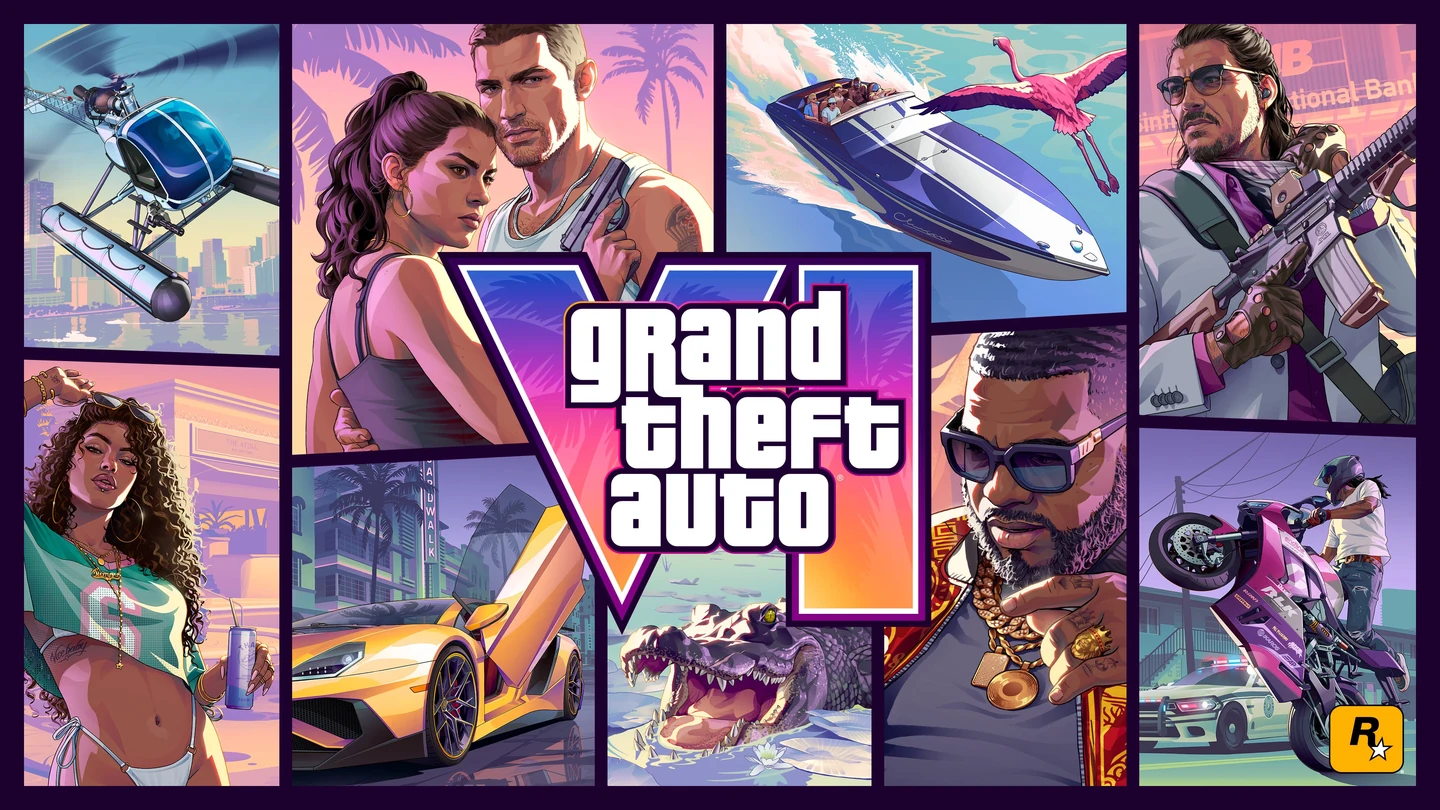
Grand Theft Auto VI
Leonida comes alive in the small details, the encounters I never plan for and the quiet moments between Jason and Lucia.
The verdict
I give Grand Theft Auto 6 a 10/10 because Leonida makes ordinary moments worth playing. A drive gives me a chance to read the street. An unexpected encounter gives me a reason to change course. A conversation can hold my attention through a look or a pause as effectively as an expensive set piece. Those moments add up to a world I want to spend time in.
What impresses me most is how many parts of the game contribute to that feeling. The controls give movement weight. The smallest animations make the people around me more readable. The writing and performances make the quieter scenes matter. A game this large earns my highest score by being as careful at street level as it is at skyline level.
Detailed category breakdown
Gameplay & Mechanics
10/10Driving makes the world matter. I judge a GTA by what happens between the objectives as much as by the objectives themselves. A drive through Vice City gives me room to choose a pace, watch the traffic, listen to the radio or turn down a street simply because something catches my attention. When the situation changes, that same space becomes something I have to read. The width of a road, what I can see around a corner and where I can turn make an immediate difference.
Actions carry weight. I enjoy the sense of commitment in movement and interaction. A turn, a hurried exit from a vehicle or a change of direction has a visible transition. That physical continuity helps me understand where Jason or Lucia is in relation to the environment. It also makes a clumsy decision feel like my decision. I can see where I lost control, what space I had available and what I could try differently.
Surprises make the controls worth learning. When something interrupts my plan, I have a reason to use what the game has taught me. A quiet route can turn into a detour. A moment that looked like background activity can become the thing I pay attention to next. I give gameplay 10/10 because driving, moving and improvising keep their value after the novelty of a mission has passed. The next interesting decision can come from the street itself.
World & Map Design
10/10Leonida keeps its sense of place when I slow down. Vice City gives me dense streets and overlapping activity. The Keys open up the horizon, and the Grassrivers offer a landscape with a different rhythm and a different relationship to water. Those transitions give travel a purpose beyond reaching a marker. Distance changes what I can see and hear, how much room I have, and what feels close enough to investigate.
The smallest details do the most convincing work. I pay attention to the way a person's head turns before the rest of the body follows, how a surface looks after rain, and how a light reads on glass compared with painted metal. I notice the way a busy street feels from inside a car compared with standing on the pavement. Each detail is modest on its own. Together they give me enough consistent information to believe that the objects and people in the scene occupy the same world.
The best surprises interrupt something ordinary. I can set out to get somewhere, notice a situation developing nearby and change what I do with the next few minutes. Some encounters show the care of authored scenes. The traffic, people, sightlines and my timing give them a different texture depending on how I arrive. I value that mixture of design and circumstance. It gives me stories I can describe in terms of what happened, what I noticed and how I reacted.
There is room for uneventful moments, too. A stretch of road with nothing demanding my attention makes the next disruption more effective. A city feels more believable when activity can continue at its own pace. That rhythm is why I give world design 10/10. Leonida makes me want to spend time somewhere, then rewards the decision to pay attention. Rockstar’s Leonida screenshot gallery
Story & Campaign
10/10Jason and Lucia give the drama a human scale. The official premise begins with a score going wrong and puts the two of them in a position where they have to rely on each other. The interesting question for me is what that reliance costs. Trust has a practical meaning when someone needs to make a decision quickly. It also has an emotional meaning when the immediate pressure goes away and the two have to speak to each other again.
The performances give the dialogue a second layer. I listen for who changes the subject, who buys time with a joke and who answers more quickly than the question warrants. A line can sound confident while the face or timing suggests uncertainty. Those details make the relationships feel earned. Humour sits alongside tension because a joke can be an attempt to keep control of the conversation, even when the situation is getting worse.
The cinematic direction knows when to hold a shot. Framing gives me a chance to notice the distance between two people. A reaction shot can reveal what someone thought of a line before they answer it. During a louder sequence, the cut and the sound mix tell me where to look. During a quieter one, a pause can carry the change in power all by itself. I give the campaign 10/10 because the writing, performance, camera and sound are making the same dramatic point from different angles. Rockstar’s spoiler-free story premise
Graphics & Performance
10/10The image has continuity from one surface to the next. Leonida impresses me most when light, weather and material give the same scene different readings. Wet pavement picks up the colour of nearby light. Duller materials hold their shape with less glare. A brightly lit street has depth when the light loses strength with distance and the darker areas still contain readable detail. The result is useful to me as I play because I can recognise the shape and atmosphere of a place while moving through it.
Effects help me understand what just happened. Spray, smoke and debris establish direction and scale. Animation tells me that somebody has shifted their attention or moved their weight before the change becomes obvious. The effect earns its place whenever it adds information to the scene. An interaction feels more convincing when the character, the object, the sound and the effect respond in a way that agrees.
I see room for a cleaner image on future hardware. I would welcome finer distant detail, more stable fine edges in motion and a higher frame rate. My 10/10 evaluates how the launch presentation supports the game I am reviewing. The density of the world, the consistency of its lighting and the amount of behaviour it can put on screen all contribute to that judgement. A future version could sharpen that presentation and make it more responsive while retaining what makes it remarkable today.
Soundtrack & Audio
10/10The sound tells me what kind of space I am in. Traffic, voices, tyres on different surfaces and the sound around the water give an area a character before I pick out any single source. A voice close to me can pull my attention from the wider street. A door or the interior of a vehicle changes how that wider space reaches me. Good audio is doing navigation work here as well as atmosphere.
Music serves two different rhythms. The radio can give an unplanned drive a personality of its own. The dramatic score has a different job as it shapes anticipation, gives a scene momentum or leaves room for a conversation to settle. I particularly value moments where a small sound or a gap in the music carries more weight because the mix gives it space. The score by Justice and the game's radio choices belong to different parts of the experience, and that distinction gives both room to work.
Performance and mix complete the dialogue. A good reading needs enough space to hear the breath, the hesitation and the shift in delivery. A scene can also keep the world audible around it, which keeps two people talking from feeling detached from the place they are in. I give audio 10/10 because the recording, the performances, the score and the environmental sound share the work of describing the scene. Rockstar on the launch trailer and original score
Content & Replay Value
10/10A repeat visit changes what I have time to see. On a route I already know, I can pay attention to the corners I passed the first time or take a slower approach. A different arrival can change what I notice, even in a familiar neighbourhood. That gives a return trip a purpose beyond looking for an unfinished icon.
Free roam and the campaign make each other stronger. Story missions give the city a particular emotional context. Time outside those missions lets me recognise streets and routines on my own terms. When the story brings me back through somewhere familiar, I have a better sense of the terrain and of what it feels like in an ordinary moment. That familiarity makes the return more interesting.
The value comes from how much can happen within a short stretch of play. A good session can be a chapter, a detour or a drive. I give this category 10/10 because I have a reason to come back for all three. I can look for a different route, pay closer attention to the performances, or spend time in an area I passed through too quickly. The review score here is for the singleplayer experience.
Why I give full marks at 30 FPS
What 30 FPS changes
Thirty frames per second gives a new frame roughly every 33.3 milliseconds. At 60 FPS that interval is about 16.7 milliseconds. More frequent images improve motion clarity and can make visual feedback to a steering or camera input feel quicker. Frame pacing has its own effect. Even intervals give camera motion a consistent rhythm, while uneven ones can make movement look rough even when the average number seems reasonable.
Why I understand the trade-off from development
I have spent years building games and software, and that experience shapes how I judge the decision. In an open world, the processor has to make time for characters, traffic, physics, animation and bringing new parts of the world into memory. The graphics processor also has substantial work to do on lighting, effects and the final image. These workloads overlap in complex ways. Reducing resolution can help the rendering side. A demanding scene can still need more processor time to update what is happening inside it.
Why I give the launch version full marks
Rockstar's technology production director has described the target in terms of the combined cost of simulating and rendering the world. What matters in my review is the result in play. When I notice the activity on a street, how movement carries weight and how a quiet situation can change, I am enjoying the things I want the game to spend its resources on. I would enjoy faster response as well. For the kind of singleplayer game Rockstar chose to make, the 30 FPS target is a trade-off I understand and accept at full marks. Rockstar’s technical explanation in its TechRadar interview
What I expect from a future version
If Rockstar releases a PC port or a version for a later console generation, I expect sufficiently fast systems to reach 60 FPS and, with the right optimisation and headroom, go beyond it. I would especially like to see sharper detail in motion and more responsive input with the same density of street activity and character behaviour. That is my expectation for the future. Rockstar's launch announcement names PlayStation 5 and Xbox Series X|S. My score is for what the game gives me today. Rockstar’s official launch platforms
What Grand Theft Auto 6 adds to the series
Grand Theft Auto established the freedom
The first game made the city an active part of the rules. A player could choose a route, get into a vehicle and create a situation the game had to respond to. That basic freedom helped turn the space between missions into part of the game.
Grand Theft Auto 2 gave the city competing interests
The sequel’s gang allegiances and respect system gave the same basic freedom a social consequence. Where I went and who I helped mattered because factions had their own interests. That made the city feel like somewhere I had to learn as well as somewhere I could explore. Rockstar’s Grand Theft Auto 2 overview
Grand Theft Auto 3 brought that freedom into three dimensions
Liberty City gave streets, buildings, radio and cutscenes a shared sense of place. Being able to choose a route now meant seeing a city unfold from ground level, in a series whose perspective had been overhead. It was the franchise’s first fully 3D entry and a milestone for the genre. Rockstar’s history of Grand Theft Auto 3
Grand Theft Auto 6 raises the standard for how a world behaves
The improvement that matters to me is how much the world gives back when I pay attention to it. Other studios can take that lesson into games with very different budgets and priorities. One might build a smaller district with more expressive characters. Another might concentrate on better consequences for player choices. That kind of competition gives players more interesting worlds to choose from. Rockstar has my full respect for the craft behind Leonida. This is a deserved 10/10.